

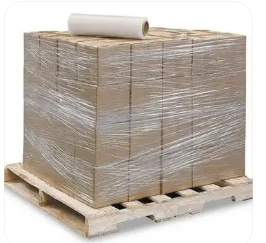
Stretch wrap is a thin,stretchable plastic film LLDPE that is used to lock and secure cased goods onto a pallet,as the stretch film is wrapped around the pallet,tension is applied,enabling the film to extend its length by up to 300%.
1. Understanding Stretch film wrap :
Stretch film wrap is a flexible plastic material characterized by its exceptional ability to stretch and recover, creating a tight, secure bond around products. The fundamental properties that make stretch film so effective include:
Key Characteristics:
Elasticity: Can stretch 200-300% of its original length
Cling Property: Self-adheres without adhesives
Puncture Resistance: Withstands sharp edges and rough handling
Transparency: Allows product identification without unwrapping
Weather Resistance: Protects against moisture, dust, and UV radiation
Material Composition:
While LLDPE is the most common material, stretch films can also incorporate:
Low-density polyethylene (LDPE)
Polyvinyl chloride (PVC)
Various additives for enhanced performance
2. The Manufacturing Process: From Raw Material to Finished Product
The production of stretch film involves sophisticated manufacturing processes that determine its final properties and performance characteristics.
A. Raw Material Preparation
The manufacturing process begins with LLDPE resin pellets, which are combined with specialized additives in precise formulations:
Cling additives: Ensure proper film adhesion
UV stabilizers: Protect against sunlight degradation
Color pigments: For product differentiation or UV protection
Anti-block agents: Prevent film layers from sticking together
Puncture resistance modifiers: Enhance durability
B. Extrusion Methods
Two primary extrusion methods are used in stretch film production:
1. Cast Stretch Film Manufacturing:
Molten polymer is forced through a flat die
The film is cooled on chilled rollers
Results in higher clarity and better thickness consistency
Generally offers better stretch performance
Production speed: Typically 100-200 meters per minute
2. Blown Stretch Film Manufacturing:
Polymer is extruded through a circular die
Air is blown to create a bubble that stretches the film
The bubble is collapsed and wound onto rolls
Provides better puncture resistance and toughness
Creates more balanced properties in both machine and transverse directions
C. Stretching and Orientation
The extruded film undergoes orientation processes:
Machine Direction Orientation (MDO): Stretches the film lengthwise
Transverse Direction Orientation (TDO): Some films are stretched widthwise
This molecular alignment enhances tensile strength and elasticity
D. Winding and Converting
Films are slit to required widths (typically 450mm, 500mm, or 750mm)
Wound onto cores of various sizes (38mm or 76mm diameter)
Packaged for distribution in boxes or palletized loads
3. Quality Control and Testing
Rigorous quality control ensures consistent performance:
Thickness Control:
Laser measurement systems maintain uniformity
Typical thickness ranges: 12-35 microns (0.00047-0.00138 inches)
Performance Testing:
Tensile Strength: Measures resistance to breaking under tension
Elongation at Break: Determines maximum stretch capability
Puncture Resistance: Evaluates protection against sharp objects
Cling Force: Ensures proper adhesion between layers
Load Retention: Tests ability to maintain tension over time
4. Types of Stretch Film and Their Applications
A. Hand Stretch Film
Thickness: 12-20 microns
Width: Typically 450-500mm
Applications:
Small warehouses
Occasional wrapping needs
Irregularly shaped loads
Retail operations
Advantages: Low equipment cost, easy to use, portable
B. Machine Stretch Film
Thickness: 17-35 microns
Width: Typically 500-750mm
Applications:
High-volume distribution centers
Automated packaging lines
Heavy industrial loads
Food and beverage industry
Advantages: Higher efficiency, consistent application, labor savings
C. Specialty Stretch Films
Pre-stretched Film: Pre-extended at the factory, reducing effort and material usage
Ventilated Film: Perforated to allow air circulation for fresh produce
UV-resistant Film: Protected against sunlight degradation for outdoor storage
Colored Film: Used for product differentiation, security, or light protection
Anti-static Film: For protecting sensitive electronic components

5. Applications Across Industries
Logistics and Warehousing:
Pallet stabilization for transportation
Unitizing mixed SKUs for handling efficiency
Protecting goods from dust and moisture during storage
Securing loads for rack storage systems
Food and Beverage Industry:
Stabilizing canned and bottled goods
Protecting fresh produce during transit
Securing dairy and meat products
Meeting FDA food contact compliance requirements
Manufacturing and Industrial:
Protecting finished products from scratches and damage
Securing raw materials for storage
Stabilizing construction materials
Packaging automotive parts and components
Retail and E-commerce:
Preparing direct-to-consumer shipments
Securing display pallets for stores
Protecting seasonal merchandise
Creating secure bundles for promotions
Pharmaceutical and Healthcare:
Stabilizing medical supply pallets
Protecting sensitive equipment during transport
Maintaining sterile barrier protection
Securing temperature-sensitive products
6. Benefits and Advantages
Product Protection:
Prevents damage from shifting during transit
Protects against environmental factors
Reduces pilferage and tampering
Maintains product integrity
Cost Efficiency:
Reduces product damage and associated costs
Lowers labor costs through efficient application
Minimizes material usage through optimized stretching
Decreases insurance claims for damaged goods
Operational Efficiency:
Speeds up loading and unloading processes
Improves warehouse space utilization
Enhances handling safety
Streamlines inventory management
Sustainability:
Modern films use less material through thin-gauging
Recyclable options available
Reduces waste from damaged products
Supports circular economy initiatives
7. Future Trends and Innovations
The stretch film industry continues to evolve with several emerging trends:
Sustainability Initiatives:
Development of biodegradable films
Increased use of post-consumer recycled content
Light-weighting through advanced materials
Closed-loop recycling programs
Technological Advancements:
Smart films with integrated sensors
Automated wrapping systems with AI optimization
Advanced additive technologies for enhanced performance
IoT-enabled monitoring of film performance
Application Innovations:
Customized films for specific industry needs
Integrated tracking and identification systems
Enhanced safety features for hazardous materials
Improved cold chain performance
1. stretch film Specifications
| Parameter | Options & Details |
|---|---|
| Primary Material | LLDPE (Linear Low-Density Polyethylene) - Most common for balance of strength & stretch. |
| Alternative Materials | LDPE (softer, less strong), PVC (flexible but less eco-friendly), EVA-based films (high cling). |
| Recycled Content | Virgin resin (100% new), or blended with Post-Consumer/Post-Industrial Recycled resin (e.g., 30-50% PCR). |
| Additives | UV stabilizers, anti-static agents, color masterbatch, cling agents (PIB or co-extruded cling layer). |
2. Thickness & Gauge
| Category | Thickness (Microns) | Gauge | Common Use Cases |
|---|---|---|---|
| Light-Duty | 12-17 µm | 47-67 ga | Hand wrap, light loads (< 400 kg). |
| Standard Duty | 17-20 µm | 67-80 ga | Hand/machine wrap, medium loads (400-800 kg). |
| Heavy-Duty | 20-23 µm | 80-90 ga | Machine wrap, heavy loads (800-1,200 kg). |
| Extra Heavy-Duty | 23-30+ µm | 90-120+ ga | Sharp/uneven loads, >1,200 kg. |
3. Roll Dimensions
| Parameter | Typical Options | Remarks |
|---|---|---|
| Width | 450 mm, 500 mm (hand); 500 mm, 750 mm (machine) | Custom widths available (200-750 mm). |
| Length | 200 m, 300 m, 500 m (hand); 1,200 m-2,000 m (machine) | Varies by thickness & core size. |
| Core Diameter | 38 mm (1.5"), 76 mm (3") | 76 mm cores for automated equipment. |
| Roll Weight | 2-5 kg (hand rolls); 15-20 kg (machine rolls) | Net weight (film) + core weight. |
4. Performance Specifications
| Property | Test Method | Typical Values |
|---|---|---|
| Tensile Strength | ASTM D882 | 20-40 MPa (machine direction) |
| Elongation at Break | ASTM D882 | 250-500% |
| Puncture Resistance | ASTM D5748 | 200-500 g/µm |
| Cling Force | ASTM D5458 | 50-150 g/in² (depending on surface treatment) |
| Load Retention | In-house testing | >85% after 24 hours |
| Tear Resistance | ASTM D1004 | 50-150 N/mm |
5. Specialty Film Specifications
| Film Type | Key Features | Applications |
|---|---|---|
| Pre-Stretched | Pre-stretched to 200-250%, reduces effort & waste. | Hand wrapping, high-efficiency operations. |
| UV-Resistant | Contains UV inhibitors for 6-12 month outdoor use. | Outdoor storage, construction sites. |
| VCI Film | Vapor Corrosion Inhibitors protect metals from rust. | Metal parts, automotive components. |
| Colored Films | Black/blue/green for UV protection or branding. | Security, light-sensitive goods. |
| Anti-Static Film | Prevents static discharge in electronics. | Electronics, sensitive components. |
| Food-Grade Film | FDA-compliant, odorless, non-toxic. | Food & beverage packaging. |
6. Core Specifications
| Core Type | Inner Diameter | Wall Thickness | Material |
|---|---|---|---|
| Standard Core | 38 mm / 76 mm | 4-6 mm | Cardboard or plastic. |
| Heavy-Duty Core | 76 mm | 6-10 mm | Reinforced cardboard. |
7. Packaging & Labeling
| Packaging Type | Rolls per Case | Pallet Configuration |
|---|---|---|
| Hand Film Cartons | 16-40 rolls | 40-80 cases per pallet. |
| Machine Film | Individual rolls | 60-120 rolls per pallet. |
| Labels | Film type, thickness, width, length, lot number, manufacturing date. |
8. Selection Guide by Application
| Application | Recommended Specs |
|---|---|
| Light Logistics | 17 µm hand film, 500 mm width, 300 m length. |
| E-commerce Fulfillment | 20 µm pre-stretched film, 450 mm width. |
| Food & Beverage | 23 µm FDA-approved film, 500 mm width. |
| Construction Materials | 25-30 µm blown film, 750 mm width. |
| Cold Storage | 20 µm cold-resistant LLDPE, high cling. |


